
Alaina Yee / IDG
Many of the chips inside a veritable Personal computer bring forth a deal of heating system and require much form of active cooling to continue unchanging. Powerful recent hardware equal Nvidia's GeForce RTX 3000-series nontextual matter cards and AMD's Ryzen 5000 processors demand tied more heat dissipation.
System builders usually swear on heatsinks and fans to manage the heat inside a PC. If you're upgrading or building a new PC—operating room your PC is overheating—you may need to install new or additional fans.
Here's how to identify when you need to replace a fan you bet to be intimate yourself.
Identifying faulty fans
Often, a buff testament depart to emit strange attrition noises or vibrations in its last death throws. Sometimes in that respect is no cautionary the least bit, and a fan will silently come to a stop.
Open finished the calculator's case, turn it on, and look around with a flashlight (but try not to touch anything while the computer is on).
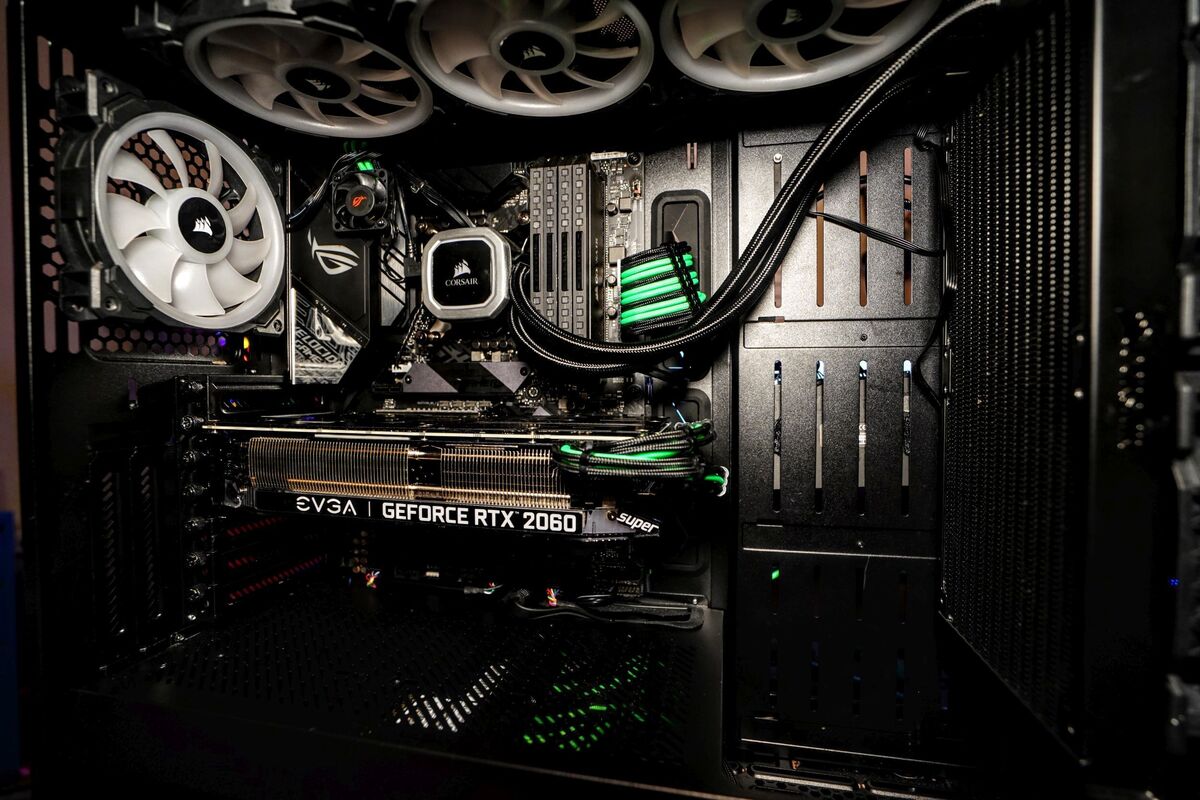 Thiago Trevisan/IDG
 This exhaust fan is affixed to the back of the case to outlet near air. Exhaust fans can also Be mounted to the top of the case, while ingestion fans are usually mounted on the front or sides.
All told but the lowest-power, passively cooled systems, you'll likely come up at to the lowest degree four fans: an intake fan, an exhaust fan, a CPU cooling rooter, and a power supply unit (PSU) cooling fan.
The CPU and PSU will follow mounted on their individual components, but case fans give notice be situated almost anyplace. Information technology's common to find ingestion fans toward the tush of a arrangement, usually at the front, where they can pull in the coolest air. Exhaust fans for expelling friendly air are commonly found at the aft OR top of a case.
If one of the fans has stopped up, tick off to make sure it's connected. If the fan is connected and silent International Relations and Security Network't spinning, it will want to be replaced.
What you need to know in front installing a rooter
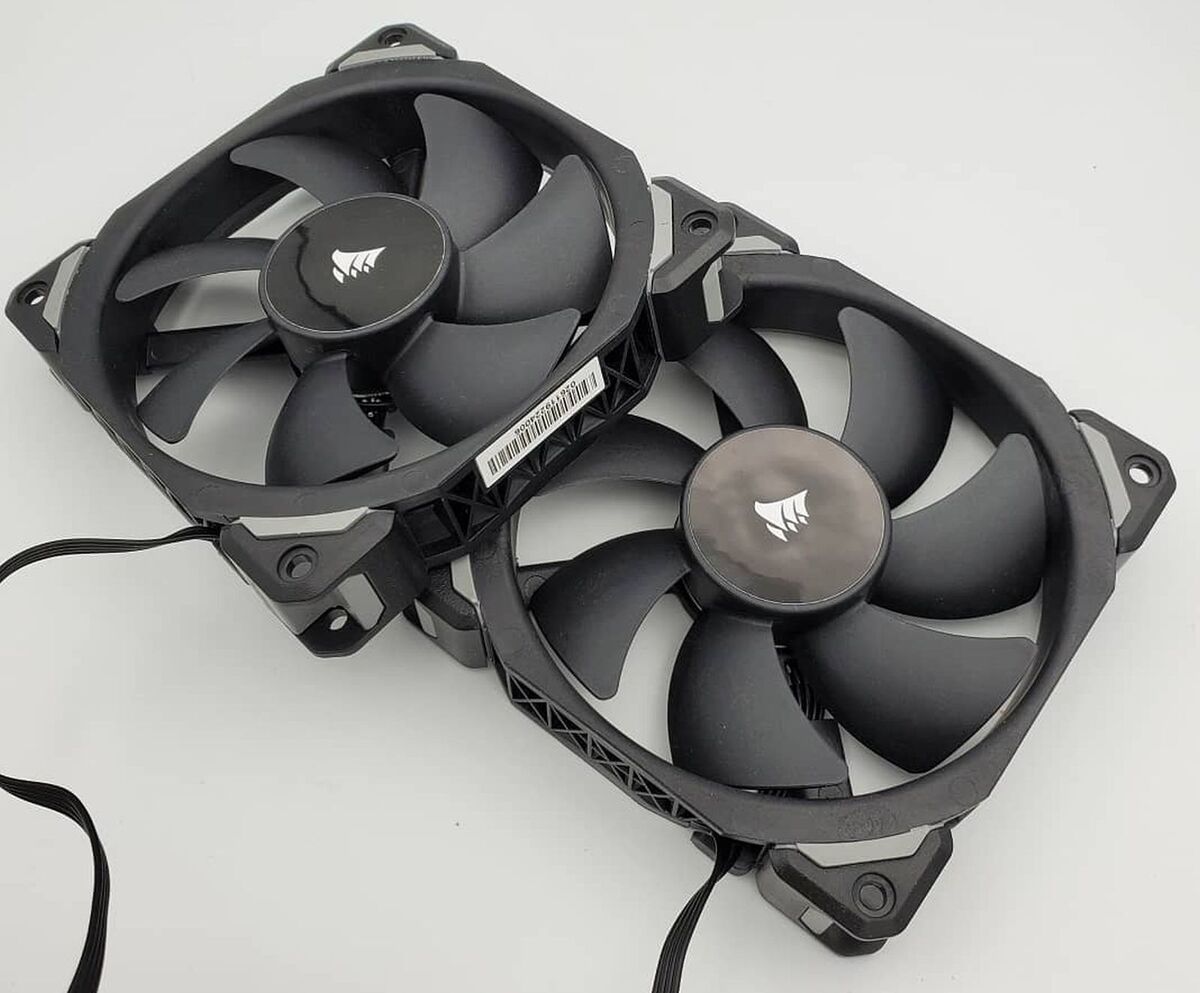
The majority of cases and PCs sold now will have unused lover locations on tap. Even if all your fans are working, on that point's a corking run a risk you'll have room for at to the lowest degree one more.
 Thiago Trevisan/IDG
 If all your system's fans are operative, yet the system runs hot Oregon unstable, you may want to add more fans. If your caseful can't take any to a greater extent fans, surgery is getting too loud, consider liquid cooling. Our guides to scene improving your PC's fans for maximum organisation cooling and how to state which direction a PC fan blows can as wel help with the process.
If you need to replace a fan, make believe bound you find a replacement with the correct size, and connective.
Choosing the right fan
Cooling fans are available in a panoramic range of sizes and shapes (and colors), from midget barrel-type fans sometimes used to cool chips, to large axial fans used in most power supplies.
The most general fan sizes give the 70mm to 140mm range, but fans as large as 230mm are becoming more popular. Fans with a diameter of 120mm are regular in newer cases.
Look for one with a high airflow (measured in cubic feet per minute, or CFM) and low noise level (measured in decibels, or dBA). This information will be on the computer software or happening the product's information page.
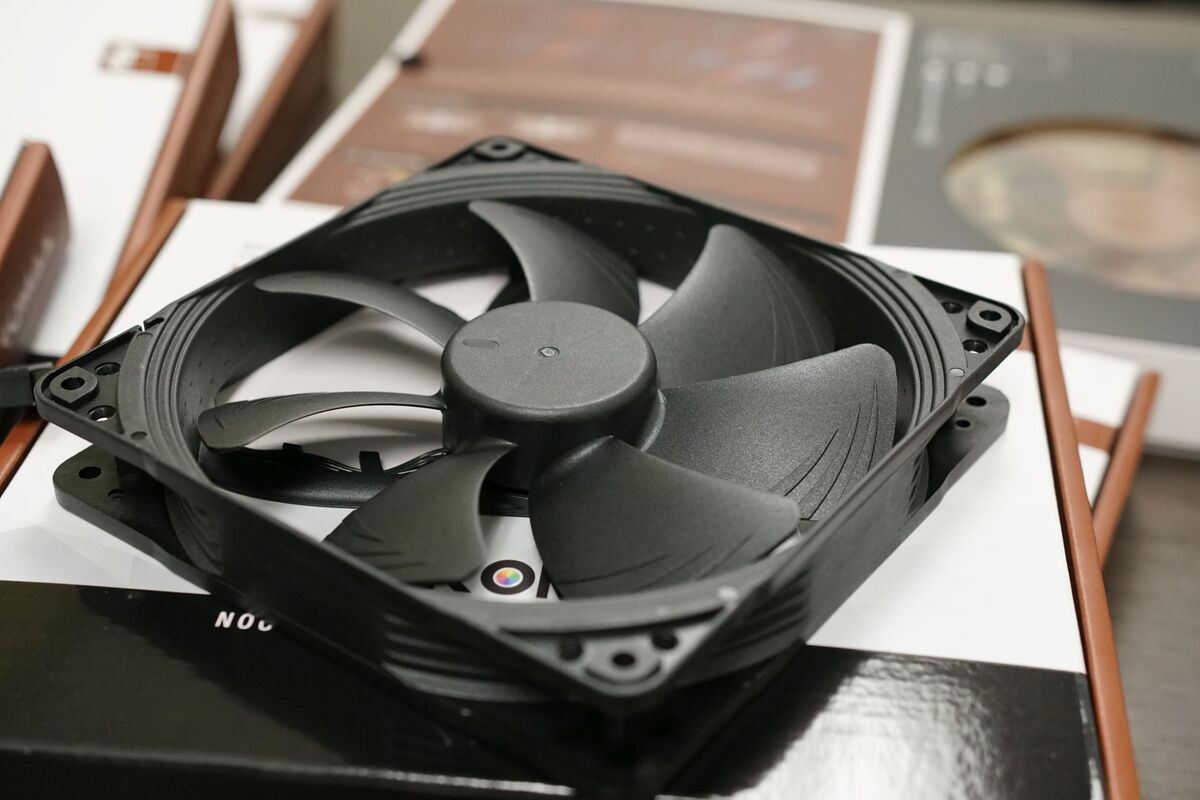 Thiago Trevisan/IDG
 Fans diverge in size, speed, blade shape and color. Approximately fans even come with built-in LED lights, others are more performance focused such as this Genus Noctua Chromax fan.
Larger fans can usually birl at lower speeds and still move plenty of air without making such noise. Some manufacturers incorporate LED firing into their fans likewise.
Maintain positive pressure
When adding fans to a scheme, maintaining positive forc inside the case can foreclose sprinkle from being sucked into any raw holes operating room crevices. To maintain prescribed pressure, you need to have a higher combined CFM for the intake fans than the exhaust fans.
Note: Most fans have small arrows embossed happening their frames that render the charge of air flow. When mounting, point the arrow towards the wrong of the computer for consumption, and the arrow towards the external for exhaust.
Power connections
Most cooling fans will connect to a PC with a basic connector of some sort. Modern systems will typically use 3-immobilise or 4-pin dedicated devotee headers, though standard MOLEX 4-pin peripheral connectors are also utilized.
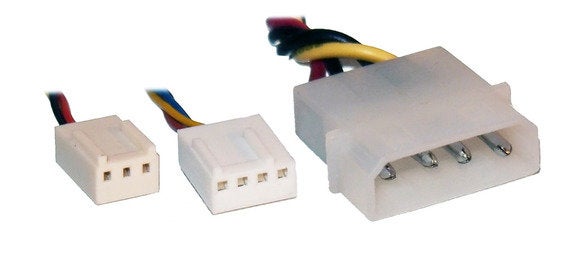
From left to right: A 3-peg connector, a 4-pin connector and a MOLEX connector. Make sure to check what case of winnow connector you need before buying your winnow.
The analog 3-thole and MOLEX connectors provide power to the lover to fix it reel. Four-stick connectors are digitally controlled and let the system to change fan speeds dynamically.
Many motherboards (and consecrate fan controllers) leave feature an raiment of 3-pin and/or 4-pin fan headers that are placed at different locations around the control board.
Installing a fresh fan
Federal Reserve note: In front you install whatever component in your Personal computer, make a point the PC is powered off.
To take out a faulty rooter or put in a new one, you'll need a Phillips head screwdriver.
If you're replacing a devotee, remove the old one by unscrewing it from the shell and unplugging the cable from the header (or MOLEX connection). You can reuse the screws if your new devotee doesn't come with any.
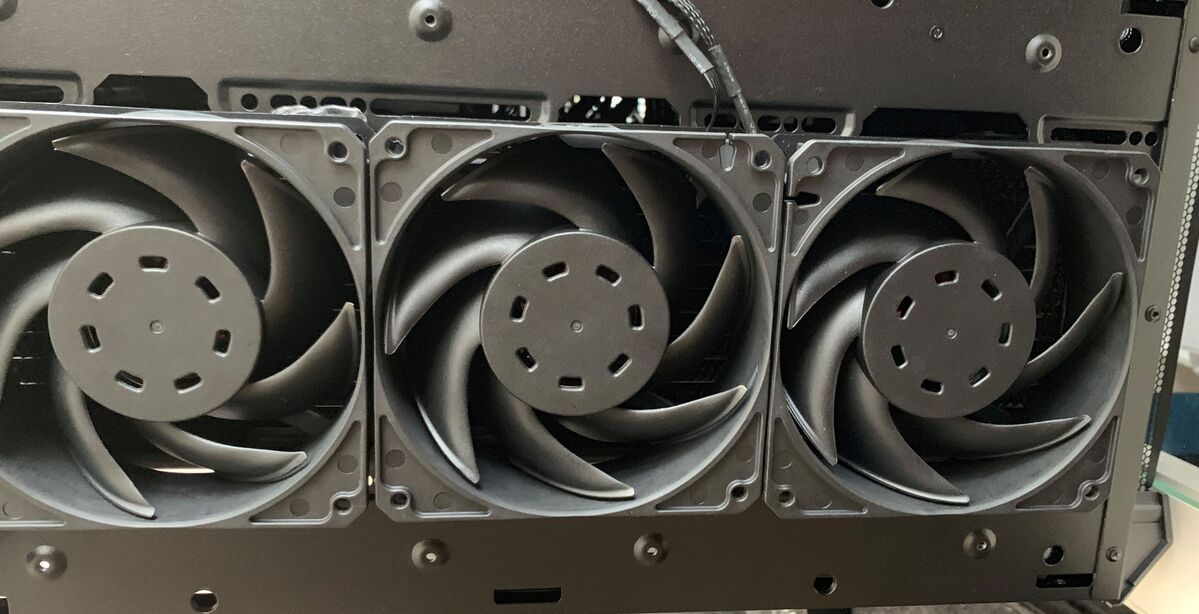
To mount a fan, hold it improving to the mounting position thus that the holes for screws line up with the holes in the case. While property the buff in place with one hand, use four screws to secure it in place with the other hired hand.
 Thiago Trevisan/IDG
 To install a case fan, hold the fan in place with one hand. With the other hand, tighten secure the fan in place with four screws
If you just now have plastic friction clips holding a fan in place, simply United Nations-snap the clips, remove the buff, and pop the revolutionary one in its put over.
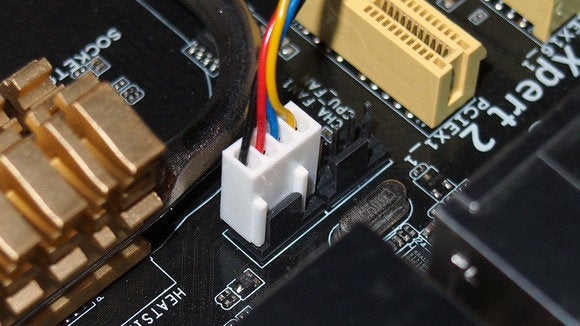
Following, attach the fan to an unused fan cope. The headers are keyed to ensure a proper connexion. Foursome-pin headers will work with 3-pin fans, merely you won't have control ended fan speeds.
 Marco Chiappetta
 Foursome-pin buff connections allow your computing machine to change the fan's speed on-the-fly front. Unremarkably, a system leave lower speed to cut down noise and increase speed when more cooling is needed.
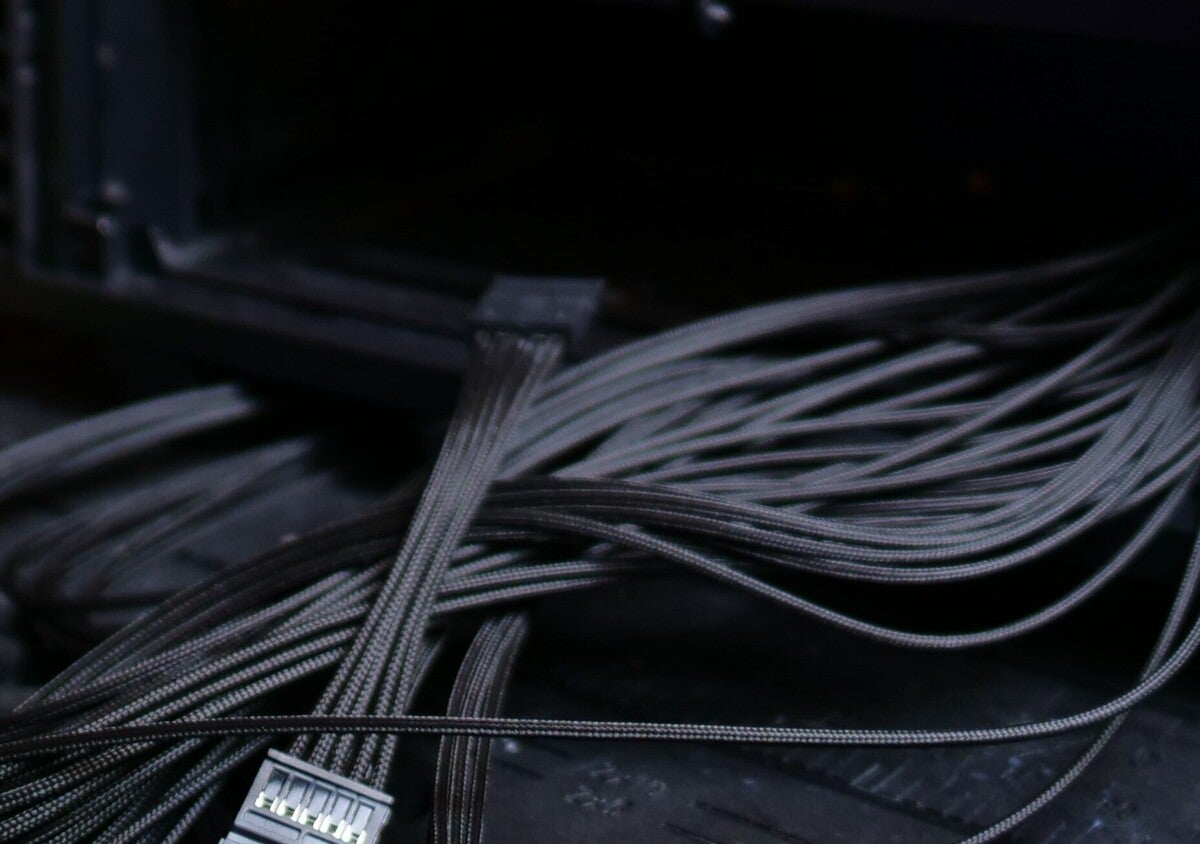
Buying a fan controller will dedicate you extra fan headers. Alternatively, you can use 3-pin/4-pin to MOLEX adapters and connect the fans right to the PSU. (MOLEX connectors are keyed as well.)
 Thiago Trevisan/IDG
 MOLEX fan connectors are older and don't offer any controls for the fan, but they're easy to connect.
One final note: Route your fan (and other) cables victimization appropriate cable management or some zip-ties. This will ensure that cables don't hit the sports fan Eastern Samoa it spins, causing a droning sound. Cables that interject contact with fans prat besides stop the fan completely, or worse, damage the cable.
Note: When you purchase something after clicking golf links in our articles, we may earn a olive-sized delegacy. Read our affiliate link policy for more details.
Is It Bad to Have a Fan Blowing on You All Night
Source: https://www.pcworld.com/video/110702/how-to-tell-which-way-your-fan-is-blowing